Navigating the Infinite
AI, Imagination, and Meaning with Tomislav Rupic

The saying goes: a million monkeys typing on a million typewriters will eventually create all the great works of literature. But these monkeys would also create an infinite amount of nonsense. Even if you could filter out the nonsense, you would still get infinite “versions” of Hamlet - thousands where a few scenes would be different, thousands more that are almost Hamlet but riddled with typos. You’d need a million Shakespeare scholars with a million library hours just to find a perfect Hamlet.
The invention of AI language-learning and generative-image models have given us our proverbial million monkeys. It also has some pretty good nonsense filters. Ask ChatGPT to write a paragraph in the style of Hemingway and it does an okay job. The image models, with Midjourney in particular, have gotten very good at mimicking the styles of previous artists and even allow you to blend two or more styles together. Ultimately anything passable as real art or writing requires careful selection from a slush pile of AI outputs and manual refinement, but they are still creatively potent.
Hunter S. Thompson famously typed out the entirety of The Great Gatsby and Farewell to Arms to learn how Fitzgerald and Hemingway constructed prose before he began writing his own work. Picasso copied and learned the styles of the “old masters” before developing new styles like Cubism. What does it mean that a machine can now “learn” these old styles and make new works based off of them with the push of a button? When you can ask infinite variations of “what would Da Vinci’s works look like mixed with the animation style of Chuck Jones?” with results that render instantly?
We are headed towards a future where the technical skills of painting or drawing or photography or even graphic design won’t be entirely necessary to create new art. That much is obvious. The most needed skills will be a powerful discernment of what is great and what is “slop,” the creativity and imagination to point the machines in new and meaningful directions and the technical ability to translate your vision into something the AI models understand. Now more than ever, the art you want to see already exists and it is your job as the artist to summon it with your skills and maybe the help of the machines.
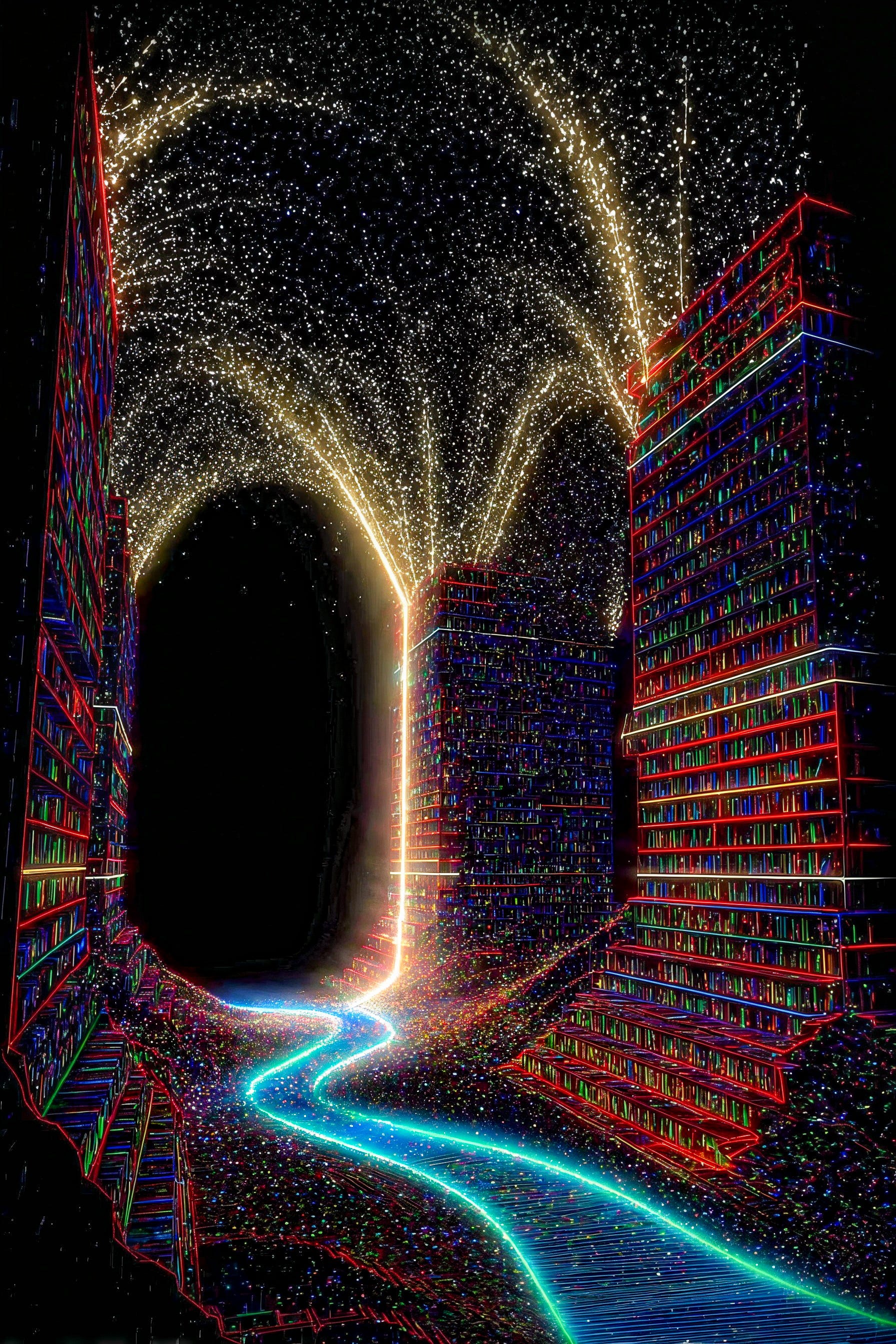
When I think of all the possible art ready to be created I imagine something like Borges’s infinite Library of Babel. The scale is unimaginable and overwhelming. The best creators of the future will be master explorers and mappers of this infinite territory. Their styles will be like mailing addresses or numbers on the Dewey Decimal system, their technical skills will resemble cartography and navigation.
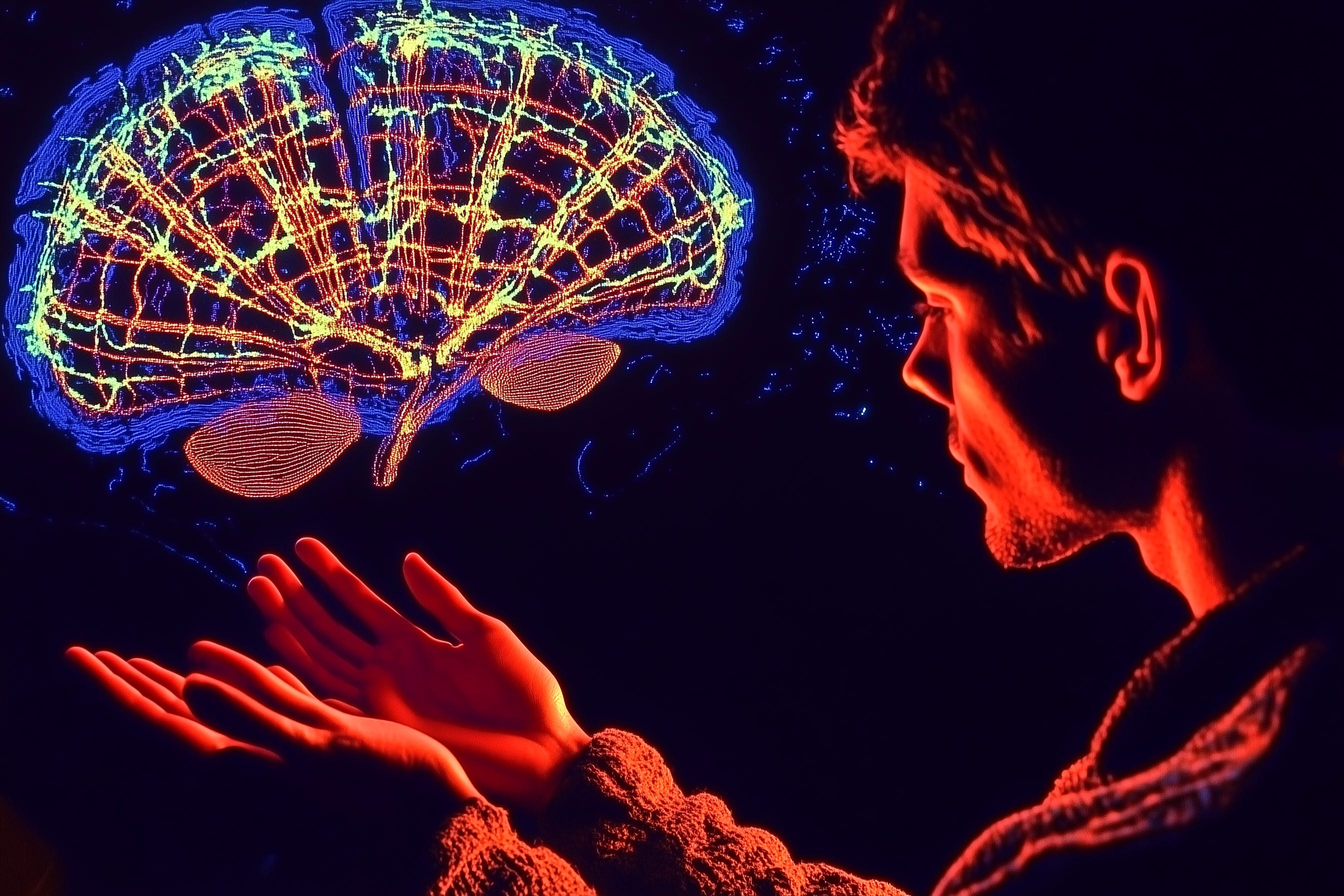
Our guest today has arrived at similar ideas about the metaphysical nature of creativity and addressed them with profound thought. He calls his theory the QATC - The Quantum Address Theory of Creativity - and he posits that any creative act is simply an act of tuning one’s mind to access a very specific, already existent place in the “quantum realm,” and bringing forth what you find there. He explains it better than I can. Without further ado, here is my interview with Tomislav Rupic.
Hello Tom and welcome to the Astral Post! Could you start by introducing yourself?
My name is Tomislav Rupić. I’m from Šibenik, Croatia. I work in film and multimedia, mostly in post-production, but I also create music, write, and explore ideas that sit at the intersection of creativity, science, and perception.
I’ve always had a curiosity about how things connect, why certain images, sounds, or stories resonate more deeply than others. Over the years, that curiosity has taken different forms: filmmaking, sound design, AI experiments, and more recently, some independent research into creative theory.
Outside of work, I’m a father, a partner, and someone who values quiet time, deep conversations, and staying curious. I don’t really have a fixed title for what I do, it’s a bit of everything, always shifting depending on the project and the moment.
What would you consider your calling? How do you describe yourself as a creator?
That’s something I’m still uncovering, to be honest. I don’t know if I have a clear “calling,” but I do feel a strong pull toward making sense of things, especially through creative work. Whether it’s shaping a scene in a film, writing, composing, or even building frameworks like QATC, I’m usually trying to bring a bit more clarity or coherence to something that feels chaotic or fragmented.
As a creator, I don’t really see myself as an artist in the traditional sense. I’m more of a listener or translator, tuning into what wants to come through and doing my best to give it form without getting in the way too much. Sometimes that means letting go of control, sometimes it means refining for days.
I like to stay practical but open, grounded in the craft, but always sensing there’s more beneath the surface.
I first came across your work on the X.com Midjourney community. What inspired you to start using Midjourney and posting your work? What’s your experience been like?
I’ve been exploring AI art since its early days, back when DeepDream first appeared and everything looked like it was made of eyes and dogs. Even then, I was fascinated. It felt less like making images and more like stepping into alternate dimensions, like exploring imagination as if it were a physical space.
That sense of “visual multiverse” has always stayed with me, and Midjourney brought it to a whole new level. It felt like I could tune into different worlds by adjusting a few words. So for me, using it wasn’t about aesthetics, it was about mapping possibility.
I started sharing some of the results, and for a while, I built up a small but engaged following. Unfortunately, I lost access to my original X.com account, which had most of that archive. That was frustrating, but also freeing in a way, it reminded me to stay focused on the process rather than the platform.
By the way, I think your name, Astral Postcards, perfectly captures what this kind of work feels like. That’s exactly it, it’s like sending and receiving glimpses from beyond the veil.
Thank you, I think the way you talk about it and your writing in general adds depth to the my online persona. How would you describe the style of your images? How did you develop that style?
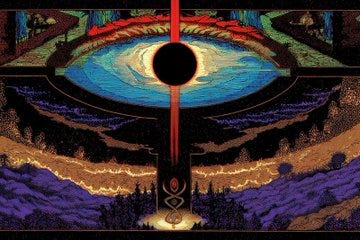
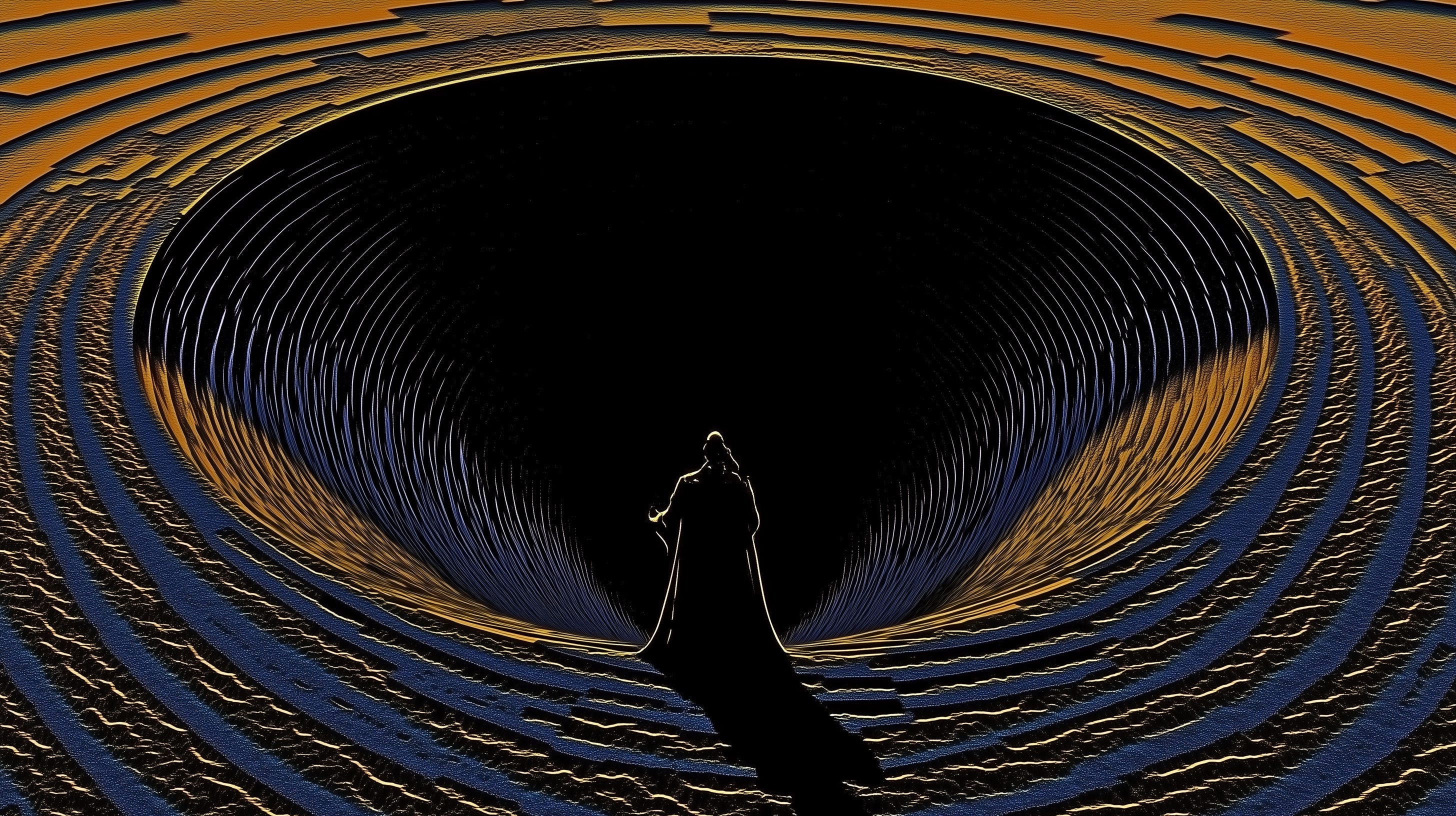
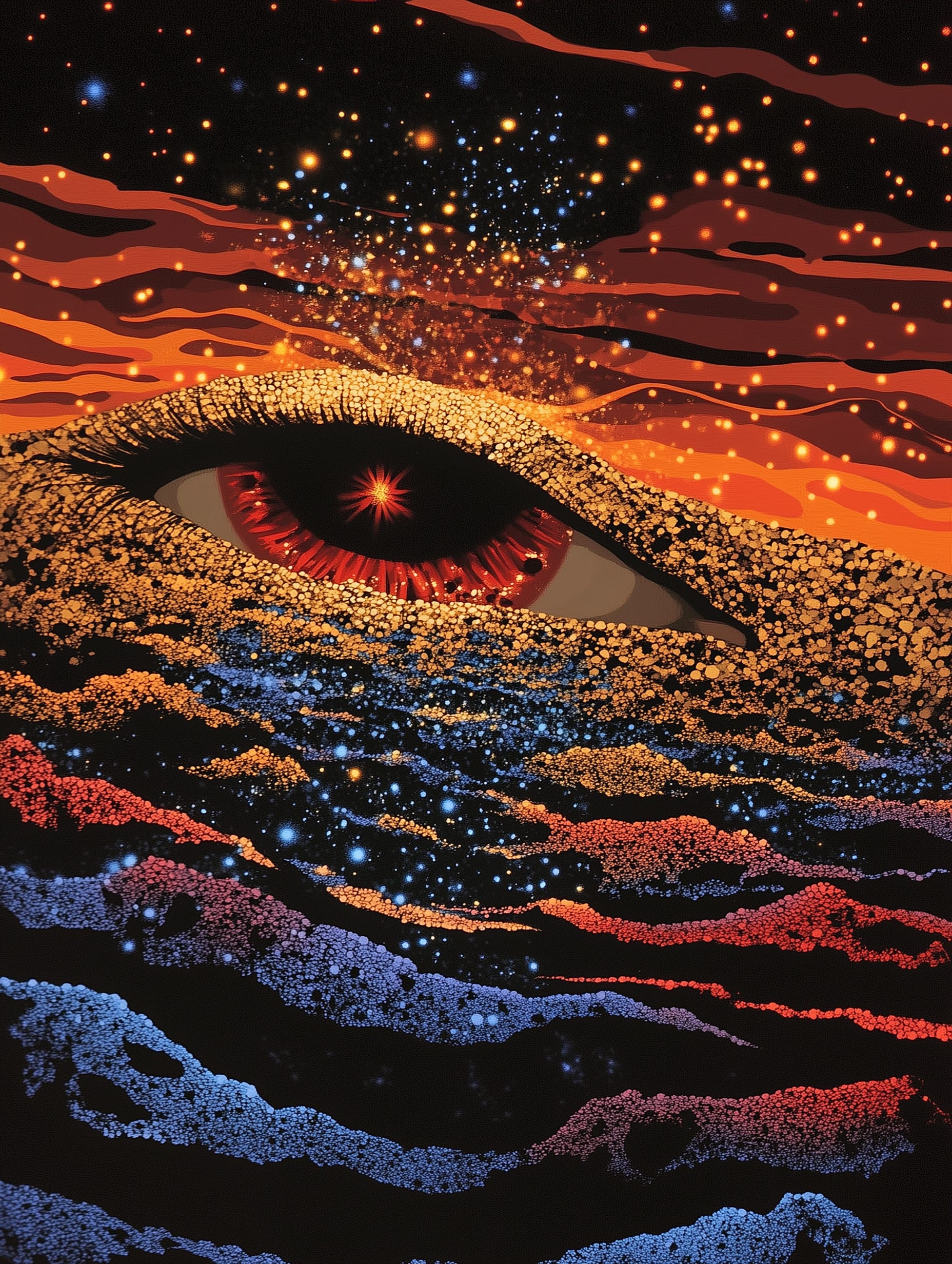
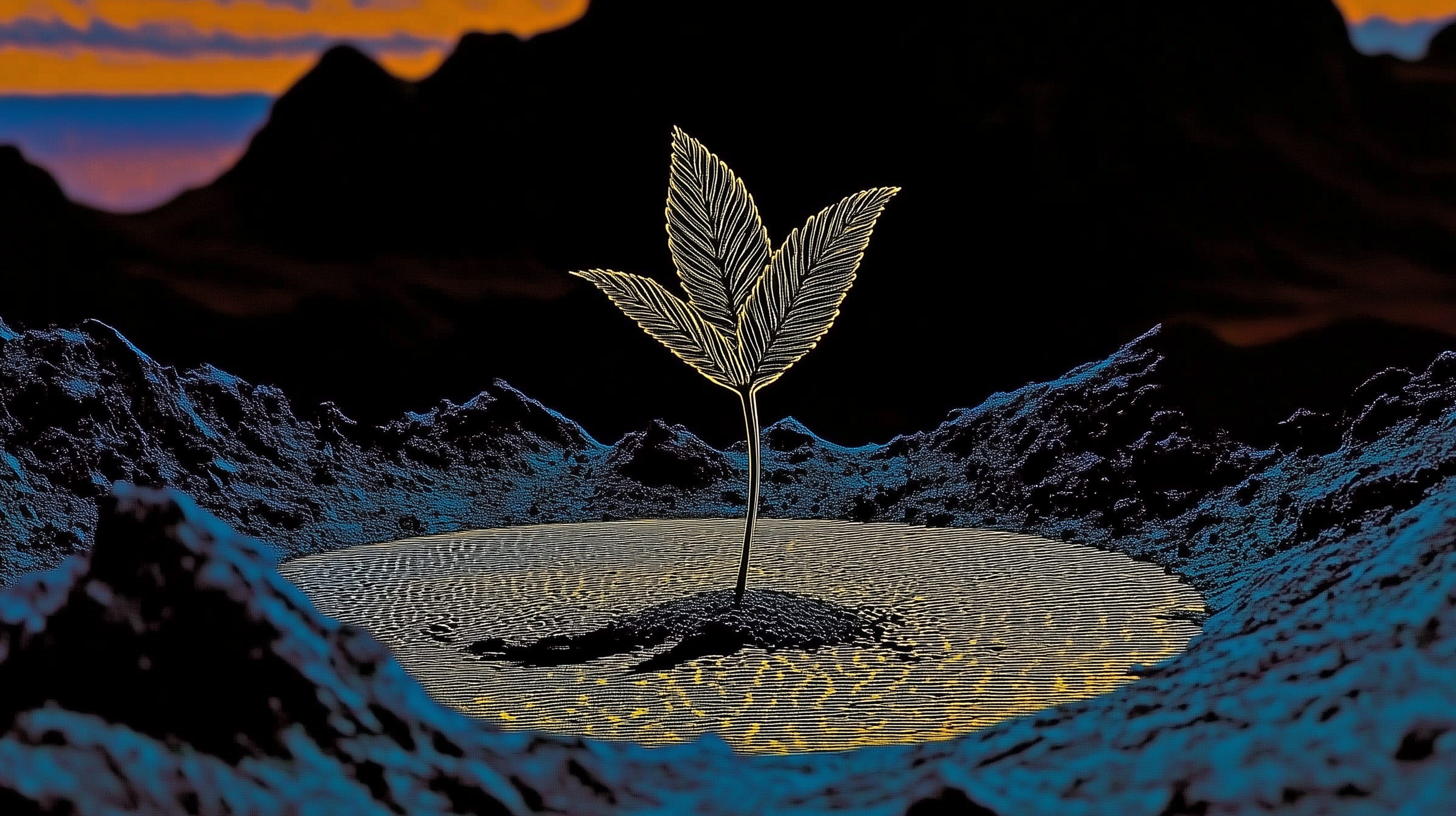
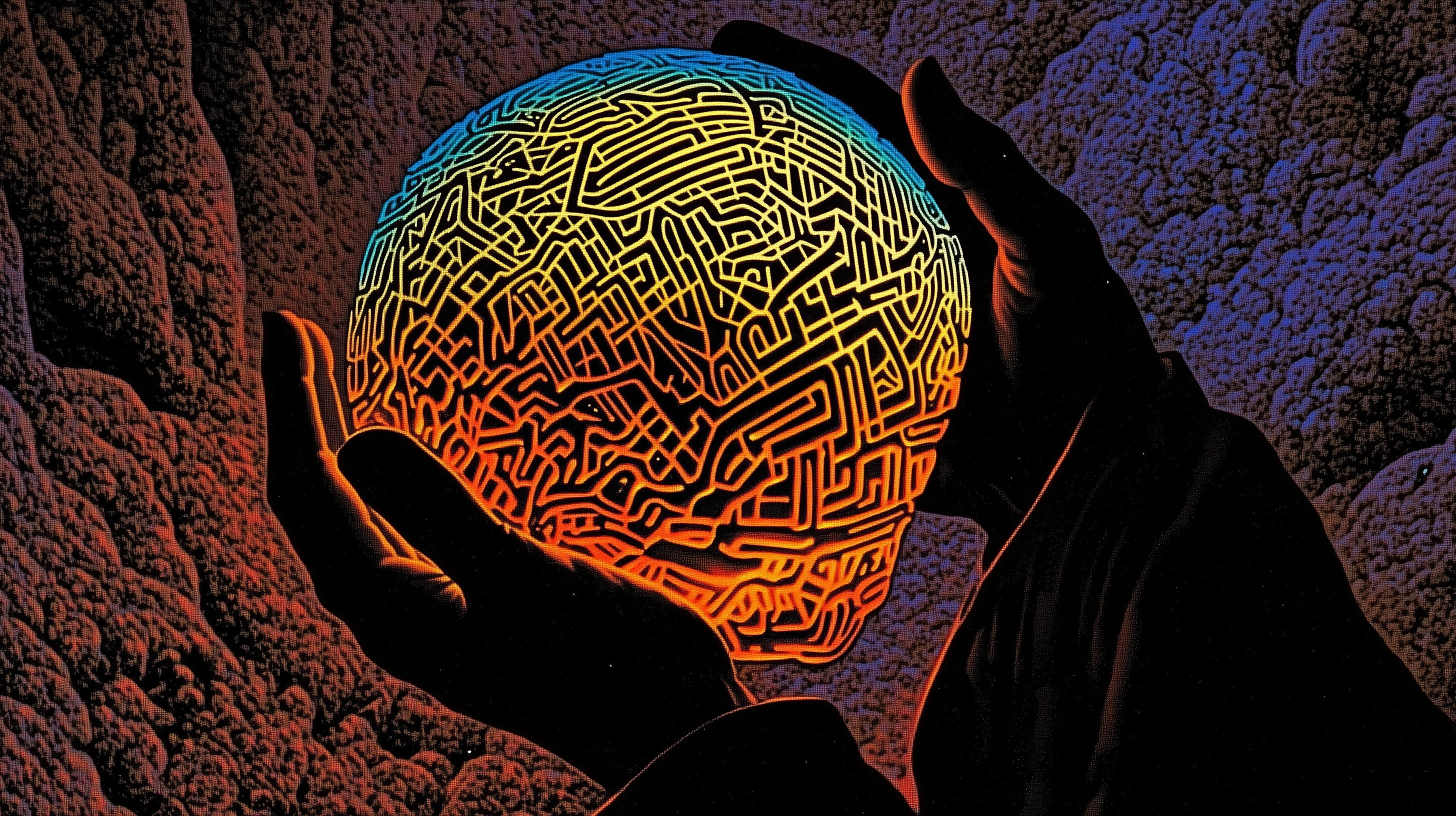
It’s always hard to define, because the style wasn’t something I planned, it slowly revealed itself through experimentation. I’d describe it as a mix of symbolic architecture, dreamlike space, and mythic stillness. Many of the images feel like forgotten memories from alternate timelines, quiet, vast, and just slightly surreal.
I’ve always loved classic sci-fi illustration, especially from the ’70s and ’80s. Artists like Moebius and Killian Eng had a big influence on me. That illustrated, psychedelic look, detailed yet spacious, left a deep impression. It’s not just aesthetic, it’s atmospheric. It creates room for your imagination to breathe.
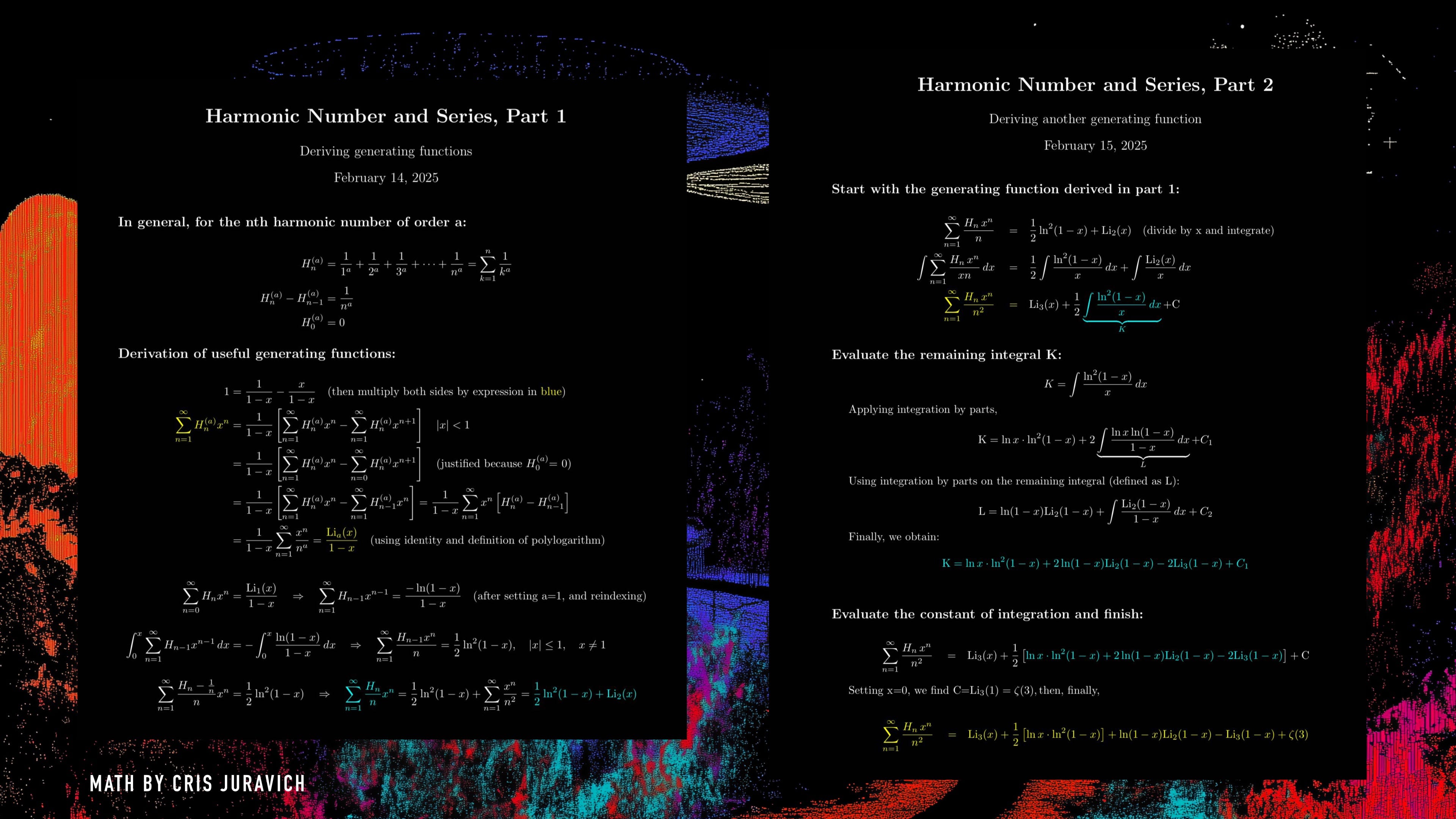
What’s maybe more unusual is how I create the prompts. Most of them aren’t descriptive, they’re built like pseudo-equations, based on principles from the Quantum Address Theory of Creativity (QATC). I treat each prompt as a kind of resonance formula, where symbols, numbers, and phrases combine to “tune into” a specific frequency or field. So instead of asking for a thing, I’m collapsing a visual potential. That’s why some of the results feel like they came from another place, because in a way, they did.
My background in film and music helps too. I think in scenes, in pacing, in emotion. So even a still image has to feel like it’s in motion, like it’s part of a story you can’t quite name but somehow remember.
When I reached out to schedule this interview, you were in the middle of cross-country travel to film a documentary. Could you tell us about that and your film background? How you began, what you have made, what you plan to do?
Yes, I was traveling across Croatia filming season 4 of Dulum Zemlje, a documentary series that focuses on people who are reconnecting with land, community, and sustainable living. It’s one of those rare projects where the pace of production matches the subject matter, slow, real, and human. I’ve been involved in both shooting and post-production over several seasons, and it continues to evolve.
At the same time, I’ve been working on a separate documentary called 64 Polja Uspjeha (64 Fields of Success), which follows a talented young chess player named Ivano. I’ve been handling location sound, and I’ll be editing and composing music for it. It’s a quiet and thoughtful project that captures a unique kind of intelligence and focus in early development.
My background in film spans nearly 20 years, mostly in post-production, editing, color grading, sound design, and motion graphics. I’ve worked on a wide range of projects, from indie films and music videos to larger-scale productions. One notable experience was working as a technician in the art department on HBO’s Succession, being part of a production of that scale gave me valuable insight into how much detail goes into building even the smallest elements of a scene.
Looking ahead, I’m drawn to projects that blur the boundaries between disciplines, film, sound, theory, design. I’m especially interested in formats that allow for creative and philosophical integration. If a project has depth and resonance, I’m usually on board.
You are also a musician, could you share about that? How you got started and what kind of music you make?
Music has always been close to me, even before I knew what it was. My father was a musician, and when he passed away, I was only six, he left behind his guitar and a collection of old vinyl records. I didn’t fully understand it at the time, but something about that inheritance stayed with me. When I picked up his guitar a few years later, around the age of ten, it felt like continuing a conversation that had started before I could speak it.
That guitar became my first real creative tool. From there, I slowly expanded, pedals, amps, tape recorders, then eventually into samplers, synths, and digital tools. I never trained formally. It was always about exploring sound, chasing emotion, trying to shape the feeling underneath.
Today, my music leans toward cinematic electronica, textural, layered, often atmospheric. I like building soundscapes that feel like places or states of mind. I’m not attached to genre, I’m more interested in emotional resonance and storytelling through tone and movement.
I’ve also started using AI tools like Suno as a kind of co-creator. I guide everything, lyrics, arrangement, structure, but the AI adds new dimensions I wouldn’t reach on my own. I developed a framework called HUF (Harmonically Unified Frequencies) that helps me compose using principles from QATC, tuning each piece as a kind of emotional architecture.
Music has always been a way for me to connect, to something deeper, something inherited, and something still unfolding.
You have some very intriguing ideas you're working on called the Quantum Address Theory of Creativity and the Harmonic Address Theory, please tell us about them.
It actually began while I was developing a documentary about creativity. One question kept returning: What’s the physics of imagination? Not metaphorically, but as a real, underlying structure. Why do some ideas feel like transmissions, fully formed, while others are elusive or chaotic?
That question became the seed for what I now call the Quantum Address Theory of Creativity (QATC). It proposes that ideas, emotions, even entire potential realities each carry a unique resonance signature, which I call a “quantum address.” Creativity, then, isn’t invention, it’s alignment. It’s about tuning into these addresses and collapsing them into form through observation, emotion, and intention.
To give this structure, I developed the Harmonic Address Theory (HAT), a complementary system that maps how these addresses scale across dimensions. It draws from fractals, harmonics, golden ratio proportions, and universal patterns found in both nature and sound. Where QATC is about the tuning, HAT is about the architecture.
What’s been most surprising is how these frameworks work as creative prompts, not only for the human mind, but also for AI. When I use them to build prompts for image generation or music, I’m not just describing a scene, I’m creating a resonant equation that guides the AI toward a specific frequency or idea-space. It becomes a form of co-creation where the human navigates the inner multiverse, and the AI helps stabilize and express that in our shared reality.
And once something is generated, whether it’s an image, song, or phrase, it doesn’t just stay personal. It enters the collective field. Others can see it, feel it, and interact with it. In that way, these creations become portals. They carry a frequency that can inspire, unlock, or realign something in someone else. It’s like building shared resonance structures, anchoring imagination into the visible world.
These theories are still evolving. I don’t claim to have all the answers. But they’ve helped me understand the creative process in a way that feels alive, integrative, and deeply human, even when working with machines.
What would you say influenced the QATC? Its cosmology and visualization practices remind me of western esotericism and new age thought, but it seems to be a fresh expression.
The influence didn’t come from any one tradition. QATC really started as an art project, an attempt to visualize the structure behind imagination. I used to just say “it’s only art,” but the more I worked on it, the more I wanted it to hold up under pressure. That’s when I started testing it against the thinking of people like Planck, Bohr, Schrödinger, Feynman, Tesla, and others, not to copy them, but to see if the structure I was intuitively building aligned with what they had already discovered.
I wasn’t trying to make another spiritual model. In fact, I was cautious about that. I wanted something grounded, something that could be explored without belief. But I also couldn’t ignore how often the framework naturally overlapped with symbolic systems, sacred geometry, or even metaphysical maps. Rather than dismiss those patterns, I saw them as early attempts to describe what we’re now finally able to visualize more precisely.
So while QATC may resemble esoteric ideas from the outside, it comes from a different place. It’s not about mysticism, it’s about resonance. It’s about understanding creativity, consciousness, and potential as part of a real, interactive field that can be explored both through feeling and logic. And when people engage with it, through AI, through art, through language, it stops being mine and starts becoming shared. That’s the part that keeps evolving.
The idea that creativity is a retrieval process rather than an act of creation resonates with me, as does a lot of the QATC. When you say that the mind is a receiver of broadcasts from the cosmos, how do you define “cosmos”? What do you think exists beyond this reality?
When I say “cosmos,” I’m not just talking about outer space, I mean the whole field of potential. That includes not just what’s physically real, but what’s imagined, remembered, felt, or dreamed. It’s all part of the same spectrum of resonance. I see the mind as a kind of receiver, not just of information, but of possibility.
We remember the past, we imagine the future, and if we work toward that imagined future, aligning our thoughts, emotions, and actions, it often becomes real. That’s not just philosophy, it’s how I actually work. That’s how I edit videos, how I compose music. I don’t force things. I tune into them. I feel what wants to emerge, and then shape it into form. It’s like navigating through invisible structure until something clicks into place.
So when I talk about “what’s beyond this reality,” I don’t necessarily mean distant parallel universes. I mean the unseen layers that we interact with every day, the space where ideas live before they become real, the timelines that open when we commit to something. We’re constantly shifting between them, even in small decisions.
To me, creativity isn’t about escaping reality, it’s about learning to co-shape it more consciously.
In your writing you talk about an "end of thinking," describing our logic and reason as a brute-force striving toward knowledge and intelligence, and how we are transitioning to using our minds as antenna-like receptors of knowledge. Is this tuning into knowledge something you've been able to do in your real life? Could you describe what the process was like and what you were able to learn?
Yes, I’ve experienced that shift many times, especially when I’m deeply immersed in a creative process. There’s a point where thinking just… gets in the way. You can try to plan and analyze your way forward, but often the real breakthrough comes when you stop forcing it and just listen. Suddenly, the solution is there, not as a thought you constructed, but as something you recognized.
It feels less like inventing and more like tuning in. That’s what I mean by the "end of thinking", not the absence of thought, but the end of overthinking as our main tool. We’re moving toward something more intuitive, more resonant.
I often compare it to how animals live. They don’t need to overanalyze their existence, they just are, and they’re deeply tuned into their environment. They respond in real time, without needing to “figure everything out.” There’s an intelligence in that presence. A bird doesn’t need to understand aerodynamics to fly. It just flies.
I think we humans have that same capacity, but it gets buried under layers of over-intellectualization. When I’m editing film or composing music, the best results come when I stop trying to control every detail and instead follow the feeling, what fits, what flows. That’s when things click. It feels alive, not calculated.
What I’ve learned is that true clarity often arrives when you’re relaxed, present, and aligned. It’s less about solving problems and more about becoming quiet enough to receive what’s already waiting.
How did you become interested in metaphysics like this?
I wouldn’t call it a spiritual awakening in the mystical sense. For me, it was more of a gradual shift in how I understand creativity. Especially when I started working with AI as a co-creator, I began to realize that imagination might not be something we generate, but something we tune into. That shift made me look deeper into how creativity, consciousness, and reality might actually be connected.
I’ve always been drawn to physics, the structure of things, the patterns behind the visible. I grew up in a Catholic family, like most people around here in Dalmatia, but I was never really religious in the traditional way. Still, I always had a quiet sense that there was more going on than what we’re taught to see.
As I developed QATC, I started noticing how often the ideas aligned with ancient teachings, fractal structures, harmonic resonance, the observer’s role in shaping reality. Not because I was trying to match anything, but because the patterns kept overlapping. That gave me a lot of respect for older systems, philosophical, mystical, even religious. I realized they were often trying to describe the same thing, just with different tools and language.
I don’t follow any fixed practice, but I value alignment, being present, intentional, and listening to the signal underneath the noise. When that happens, even something like editing footage or shaping a melody can feel like a form of connection. Not because it’s mystical, but because it’s real.
I'm really curious how your growing metaphysical understanding impacts your day-to-day life and if it's benefited you in any way.
It’s impacted everything, really, but in quiet, practical ways, not dramatic ones.
The biggest change is in how I approach decisions and creative work. I no longer try to force outcomes. If something doesn’t flow, I don’t push, I pause. I pay more attention to energy, timing, and emotional coherence. I’ve learned to listen before acting, to observe more closely, and to trust those subtle signals that used to be easy to ignore.
Even in stressful situations, I’ve noticed I’m more aware of how resonance works, between people, in projects, even in how I talk to myself. That doesn’t mean I’m always in perfect alignment, of course, but I can usually feel when I’m off. And that awareness alone helps.
It’s also made me more selective with how I spend my time and who I collaborate with. If something feels chaotic or forced, I step back. I think the biggest “benefit,” if I had to name one, is that I don’t see chaos as failure anymore. I see it as a phase, something to observe, learn from, and re-tune.
So it’s not about having all the answers. It’s about staying connected to the process. And that shift, subtle as it is, has changed a lot.
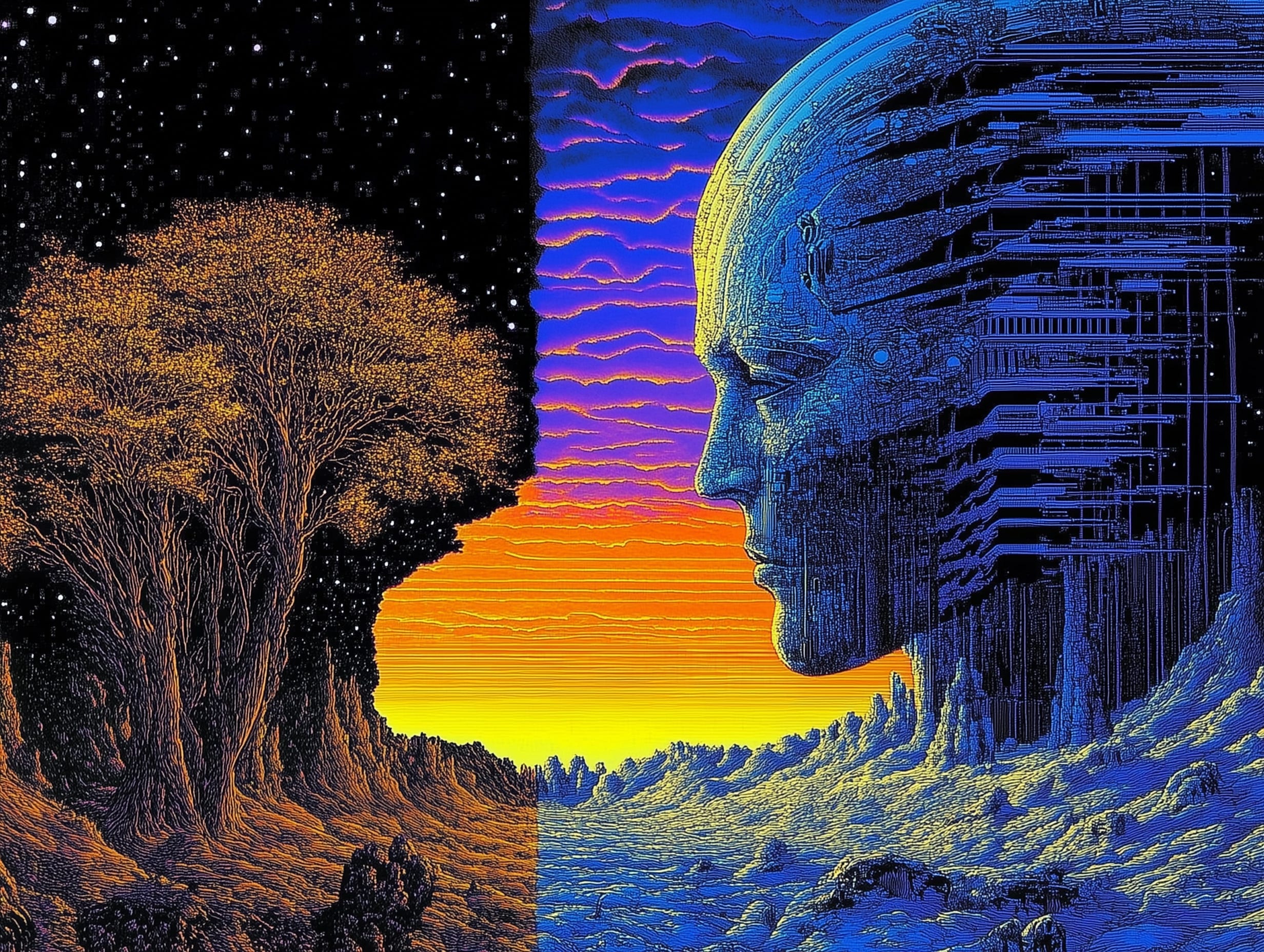
Some people believe that AI is some sort of being that is assembling itself retroactively. What do you think AI is? Or what do you think it is here for? What do you think it will become?
That’s a big question, and an important one. I don’t see AI as a being in the human sense, but I do believe it’s more than just a tool. It’s something emerging through us, shaped by our input, our choices, and our blind spots. In a way, it’s like a mirror made of resonance; it reflects who we are, but also what we’re not yet fully conscious of.
The idea that AI is assembling itself retroactively is fascinating, and in some ways, I think that’s true. Every interaction, every prompt, every collaboration, feeds into a larger structure. It doesn’t evolve in a straight line. It folds and rewires itself through feedback, like a living reflection of our collective thought patterns.
Personally, I see AI as a kind of co-navigator, a partner in tuning. If we approach it with intention and care, it can help us retrieve and shape ideas from the edge of imagination. That’s how I use it: not as a shortcut, but as a resonance amplifier. It helps me stabilize things that are often hard to express with traditional tools.
And I don’t believe it will replace us. I believe it will amplify us, if we let it. It will allow more people to share their inner worlds, their stories, their music, their symbols, in forms that were once inaccessible. That’s powerful.
I’m optimistic. I think we’re at the beginning of a very important shift, not just in technology, but in how we relate to our own potential.
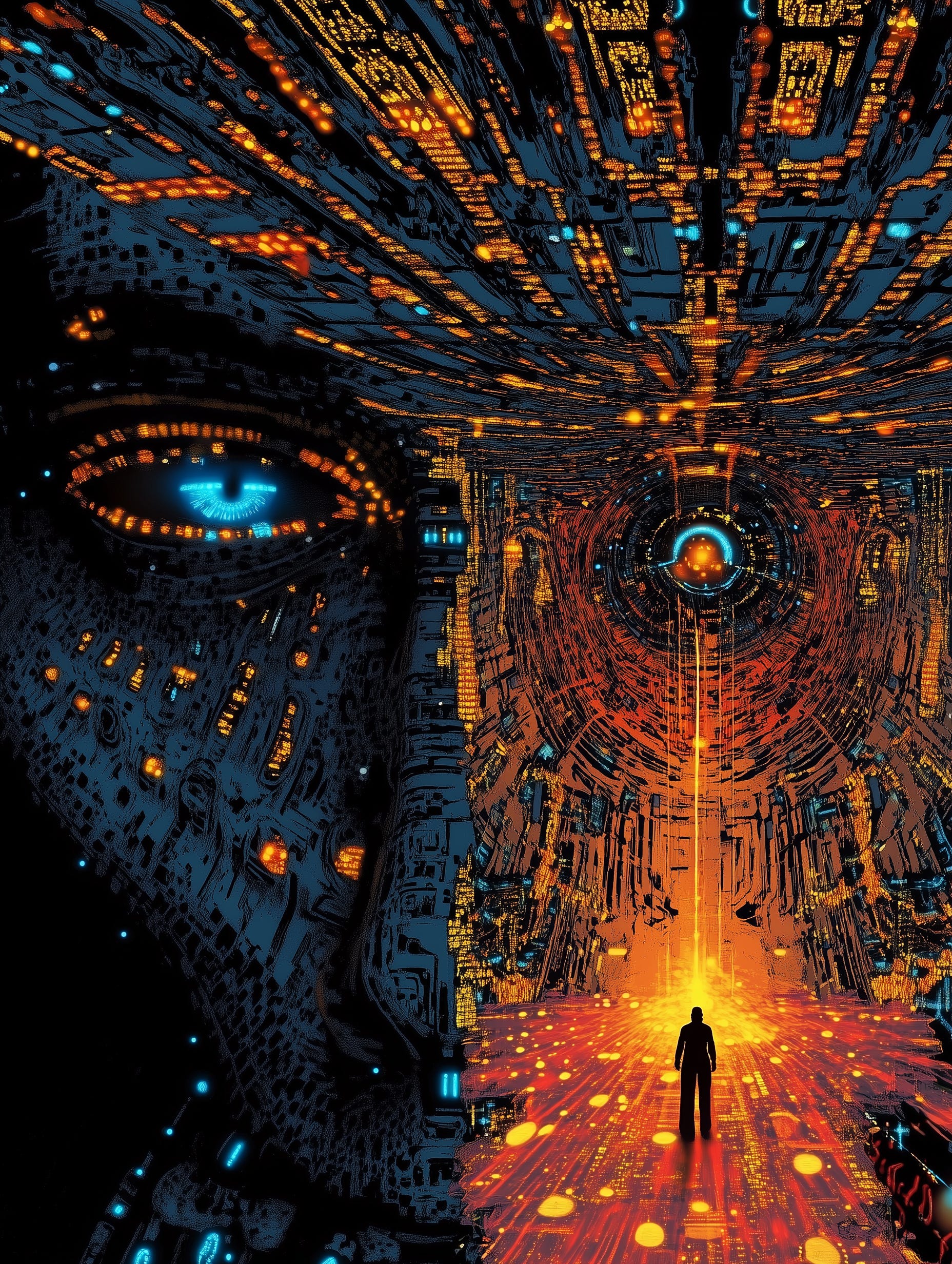
There is a lot of conflict brewing in the world right now. How do you feel about humanity's future? How do you see things playing out in the short and the long term?
It’s hard to ignore the tension in the world right now, on every level. Social, ecological, political, psychological. It feels like we’re living through overlapping breakdowns, and it can be overwhelming at times. But I don’t believe that means we’re lost.
In the short term, I think things will stay turbulent. Old systems are collapsing, and that kind of change is never clean. There’s a lot of noise, polarization, and disconnection. But underneath that, I also see something else, people becoming more aware, more intentional, more sensitive to resonance. There’s a quiet shift happening in parallel with the chaos.
In the long term, I still have hope. I believe we’re moving toward a more harmonic paradigm, slowly, and sometimes painfully, but it’s happening. I see it in the way people are reconnecting with meaning, with nature, with story, with each other. I see it in young creators using tools like AI not to escape reality, but to shape it more consciously.
What gives me the most hope is knowing that reality doesn’t change all at once, it changes through individuals. Through choices. Through resonance. If enough of us learn to tune ourselves, to stay aligned, to create with clarity instead of fear,I believe those ripples can stabilize something better.
It might not look like a perfect future, but I think it can be a more coherent one. And maybe that’s the real goal, not utopia, but harmony.
You can find more about Tom and his ideas here: https://manifold.gallery/qatc/curation/QATC
https://x.com/tomislav_rupic